

Stress in a Piglet's Environment
Introduction
I watched the film Dominion a few days ago and could see many factors, which are causing stress in intensive farming. ‘In the 1960s there were around 50.000 pig farms in Australia, today there are less than 1400, while the number of bred and slaughtered pigs for food has increased. 2015 49 farms housed 60% of the country’s total pig population’ (Dominion, 2018). This is a phenomenon, which is seen in most industrialized countries.
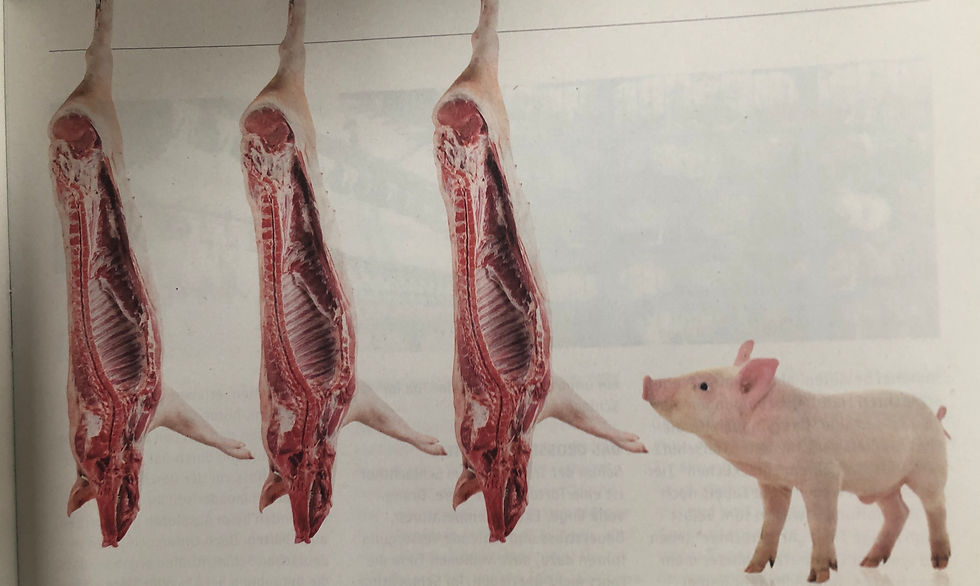
The Life of a Piglet in Factory Farming
When you start by the birth of a pig, the first factor which causes stress is farrowing pens. The mother cannot move in this cage, so there is no opportunity for natural interaction with her offspring. Sometimes the mothers even crush their babies accidentally.
10-18% of the alive, born piglets do not reach weaning age. Thirst, hunger, and diseases are common reasons for this.
At three to five weeks of age, they are taken away from their mothers. ‘The process of weaning is one of the most stressful events in the pig’s life that can contribute to intestinal and immune system dysfunctions that result in reduced pig health, growth, and feed intake, particularly during the first week after weaning’ (Campbell et al., 2013).
Small born piglets are seen as economically unviable and therefore are usually killed by the staff in very inhumane ways.
Castration, teeth, and tail cutting without pain relief are done after a few days of life. This is to reduce cannibalism. Pieces get cut from their ears or tags punched in their ears for identification.
With five months they are slaughtered.
The happy Piglets from Farmer Hubertus
On the other hand, there was broadcast on Television, which introduced the ‘Happiest pigs of Germany’ (Galileo, 2019). This farmer has 800 pigs, which stay at his farm until they are slaughtered. Which means no transport and less stress, since usually most farms are only specialized in a specific life span of a pig.
On this ecological farm, the mothers can move freely and spend the first three weeks after giving birth alone with their piglets. After that time, they will be regrouped with six other pig families. Here they have access to a 55-meter outdoor area. They stay in this group till the day of slaughter. Hubertus does not cut the tails or teeth of his piglets. Since he is housing them in the described way, they do not develop behavioral disorders. He also provides toys for them, like soccer balls. His pigs have a space of 4-8 square meters per pig. In factory farming, an area of 0.75 square meters per pig is common. The food for the pigs is harvested at Hubertus farm (like lupine and wheat). He adds no antibiotics or chemicals for growth. His pigs, therefore, grow slower, and he slaughters them when they are eight months old. Hubertus says that it is essential to treat them with love and have a connection to them. No aggression or violent behavior, as they react very sensitive to this.
Conclusion
The mentioned examples are incredibly different. It is evident that Hubertus way of raising piglets is a lot less stressful than in factory farming. That there is no need to cut tails or teeth is the best evidence for this.
The issue is that there would be not enough space to raise all the pigs this way if the meat consumption stays the same as it is today.
I do not eat any animal products and think even the happiest pig does not want to die, and also the age of 8 months is very young to die.
I think Hubertus kind of housing and raising farm animals applies to many species. Space, the possibility to move and behave naturally and being together with well-known animals, is for most species less stressful. Cattle, goats, chicken… Of course, there are also differences between these species. Cows like to graze, for example, while pigs prefer to dig. So, it needs to be species specific.
References
Campbell J.M., Crenshaw J.D. and Polo J. (2013) The biological stress of early weaned piglets. Journal of Animal Science and Biotechnology, 4, (19).
Dominion (2018) Directed by Chris Delforce [Film] Australia: Aussie Farms.
Galileo (2019) Hier leben die glücklichsten Schweine Deutschlands. ProSieben, 17 January, 19:05 hrs, 2019. Available at: https://www.prosieben.de/tv/galileo/videos/16-hier-leben-die-gluecklichsten-schweine-deutschlands-clip. [Accessed 30 January 2019].


Comments